If you have never been whitewater rafting before, the questions tend to come in a rush. How scary is it really? What if I fall out? What if my kids panic? What if I do? These are the questions the brochure copy never quite answers, because brochure copy is written to sell, not to settle nerves.
This guide is different. It walks through a day on the Upper Colorado River the way it actually unfolds, from the drive over the pass to the moment you peel off your wet shoes at the outpost. The Upper Colorado is one of the most approachable rafting trips in the state, but knowing that on paper is not the same as knowing what the morning will feel like. Here is the morning.
The Drive to the Put-In: What to Know Before You Arrive
Most guests rafting the Upper Colorado with us are coming from Denver, Breckenridge, Winter Park, or Vail. The drive to our Kremmling outpost is part of the experience, and worth a little planning.
Drive Times to Kremmling
- From Denver: about 2 hours via I-70 and US-40, longer in summer weekend traffic
- From Winter Park: about 45 minutes
- From Steamboat Springs: about 1 hour
- From Breckenridge: about 1 hour 15 minutes
- From Vail: about 1 hour 15 minutes
A few practical notes. Cell service drops in stretches between Empire and Kremmling, so download driving directions before you leave. The route over Berthoud Pass climbs to over 11,000 feet, which can affect anyone sensitive to altitude, so plan to drink water on the way up. Gas stations are sparse past Empire, so fill up before the climb.
Plan to arrive at the outpost 30 minutes before your scheduled trip time. That cushion absorbs unexpected slowdowns and gives you time to use the bathroom, finalize paperwork, and meet your guide before the safety briefing.
Arriving at the Outpost: What Happens in the First 30 Minutes
The Kremmling outpost is more low-key than most first-timers expect. There is no sprawling resort and no long line. You will check in at the front desk, sign waivers if you have not already done so online, and meet the staff who will gear you up.
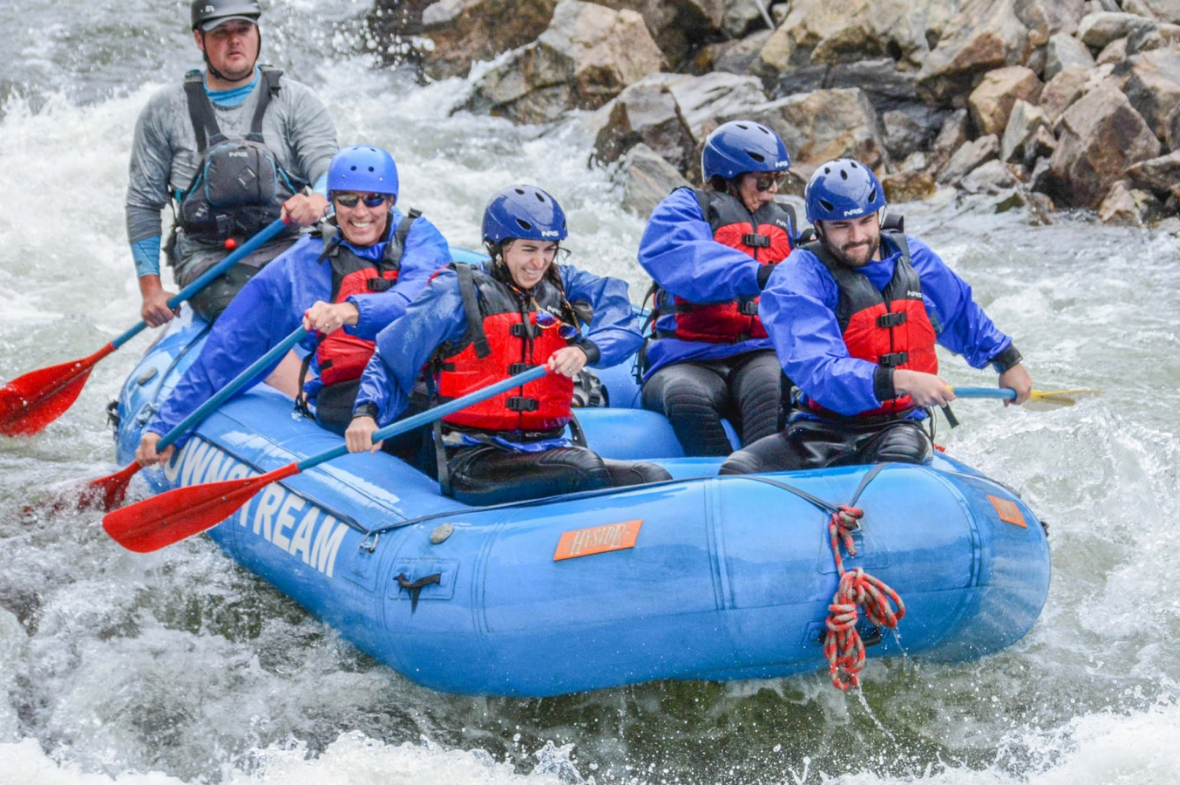
Gear is straightforward. You will be fitted with a personal flotation device (PFD) that snugs tight against your ribs, and a helmet sized to your head. If conditions call for it, you may also get a splash jacket. Wetsuits are not typically necessary on the Upper Colorado, though we keep a limited number on hand for cold-weather days. Whatever you wore that you do not want soaked goes in your car.
After gear-up, your guide gathers your group for a safety talk. This is the most important 10 minutes of your day. You will learn how to hold a paddle, how to sit in the boat, what to do if you fall in (you almost certainly will not), and the few simple commands your guide will use on the water. The talk is calm, clear, and built for first-timers. If you have questions, ask. Guides would rather answer five questions on shore than have one confused person on the river.

Scenic Beauty on the Upper Colorado River
The picture says it all. The Upper Colorado River winds through rugged canyons and wide-open valleys, offering some of the most scenic rafting in Colorado. Guests often spot eagles soaring overhead, bighorn sheep navigating the cliffs, and the occasional moose grazing near the banks. Between the wildlife, colorful rock formations, and peaceful stretches of water, it’s a journey that highlights both adventure and natural beauty.
Highlights of this section of river include:
Towering canyon walls and colorful rock formations
Wildlife like bald eagles, bighorn sheep, and even moose
Radium Hot Springs, a riverside soak right along the river
Optional cliff jumping for adventure seekers

Colorado River Rapids & River Conditions
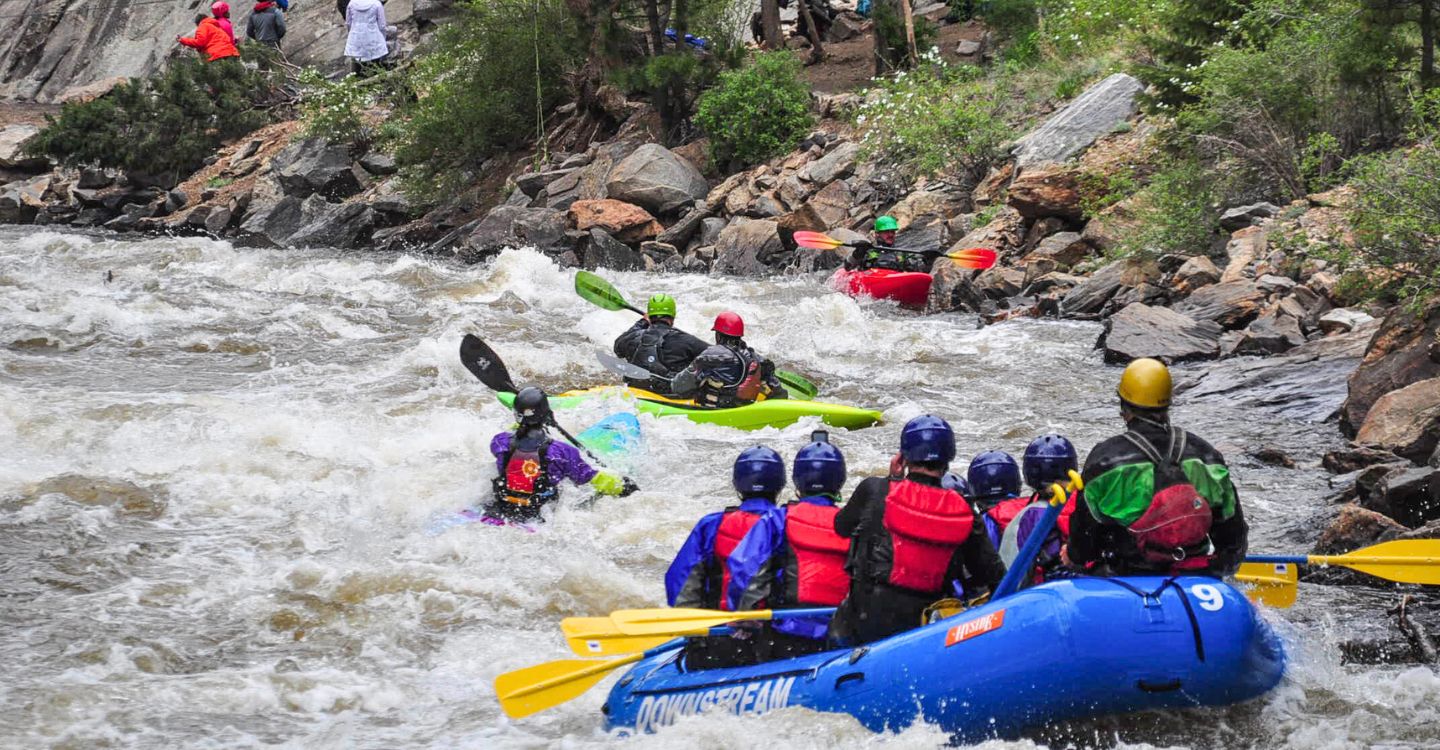
Most of the Upper Colorado is rated Class I–III, which means you’ll experience a mix of calm floating sections and fun, splashy rapids. This balance makes it approachable for beginners, kids, and anyone looking for a lighter adventure without missing the thrill of running rapids. Water levels vary throughout the season, higher in late spring and early summer with snowmelt, and mellower by late summer, so your trip can feel different depending on when you go.
Here’s what you can expect on an Upper Colorado River rafting trip:
Class I–III rapids (gentle, splashy, and beginner-friendly)
Calm pools between rapids for floating and relaxing
Higher flows in late spring/early summer, mellower by late summer
A great option for families, beginners, and those seeking lighter adventure
For those searching for beginner-friendly ways to experience the Upper Colorado River, this section of the river is considered one of the most approachable in the state.
What the Rapids Actually Feel Like
The most common pre-trip fear is that whitewater rafting is going to feel out of control. On the Upper Colorado, it does not. Here is the honest version.
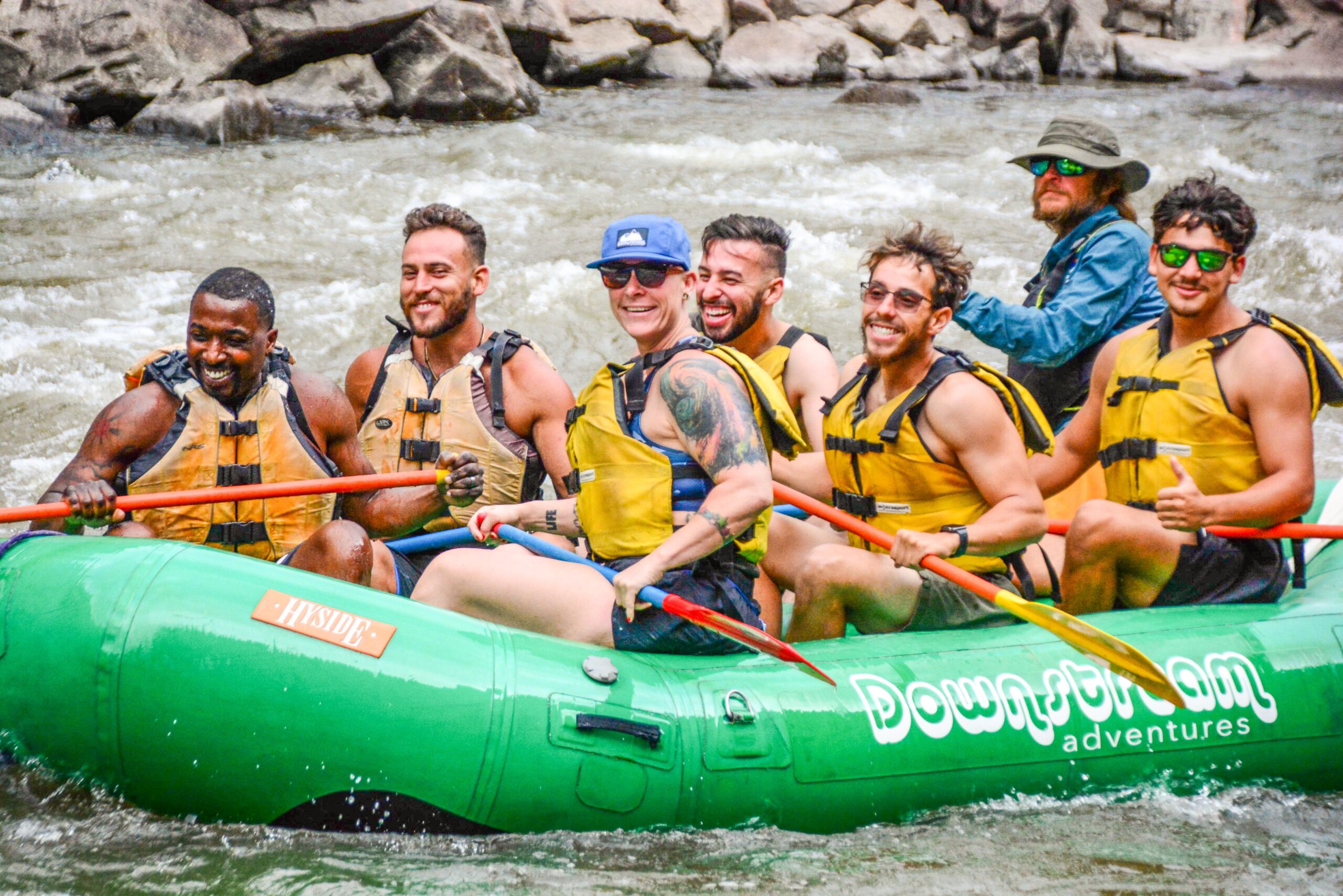
A class II to III rapid on this river lasts somewhere between 10 and 30 seconds. As the boat enters the rapid, the front of the raft drops into the wave, water comes over the bow, and you get hit in the face with cold spray. The boat bucks. You hold your paddle and follow the command your guide just shouted (usually “forward!” or “all back!”). Eight or 10 strokes later, you are through, the boat is back on flat water, and someone is laughing or whooping. That is the rhythm.
You will get wet. Not damp. Wet. Plan for it. Wear a swimsuit or quick-dry layers under whatever you brought, and have dry clothes waiting in the car for the drive home.

Is the Upper Colorado River Good for Families?
Yes, the Upper Colorado is widely known as one of the most family-friendly stretches of river in Colorado. With its gentle rapids, calm pools, and stunning scenery, it’s perfect for first-time rafters, families with younger children, and even grandparents who want to join in on the fun.
Why families love this section:
Gentle rapids and calm stretches
Minimum age of just 3 years old
Suitable for multi-generational groups
Options for both relaxation and excitement
How to Pack for Your Upper Colorado Rafting Trip
Rafting outfitters such as Downstream Adventures provide all the essential gear, including personal flotation devices, splash jackets, and paddles. Guests should bring a water bottle, water shoes or secure sandals, a towel, sunscreen, and a quick-dry outfit. Hats and sunglasses with straps are also recommended. If you want to be extra prepared, we’ve created a simple packing checklist you can use for your trip.
Packing List
Provided by Downstream Adventures:
Life jacket (PFD)
Helmet
Paddle
Rafting guide and safety orientation
What to Bring:
Quick-dry clothing (avoid cotton, it stays wet)
Secure footwear (water shoes or sandals with straps, no flip-flops)
Swimsuit or shorts and t-shirt
Sunglasses with strap
Hat or visor for sun protection
Sunscreen (reef-safe recommended)
Refillable water bottle
Towel and dry change of clothes for after the trip
Optional:
Light jacket or fleece (weather can change quickly in the mountains)
GoPro or waterproof camera
Small dry bag if you want to bring personal items

When’s the Best Time to Raft the Upper Colorado River?
Rafting season typically runs from late May through September. Late spring and early summer bring higher water levels from snowmelt, creating faster currents and splashier rapids. Late summer and early fall bring warmer water, mellow flows, and long, sunny days, ideal for families with young kids or those who want a more relaxed float.
Seasonal differences to consider:
Late spring & early summer: higher water, splashier rapids
Late summer & early fall: warmer water, sunny days, mellow currents
Both seasons offer memorable experiences depending on your style
When planning the best time to experience the Upper Colorado, consider whether you’d prefer a more adventurous ride (early season) or a laid-back float (late season).
Ready for your Upper Colorado River rafting trip? We offer both half-day and full-day trips. Whether you’re looking for a quick getaway or a full-day adventure, our guides make sure your time on the river is safe, fun, and unforgettable.
Frequently Asked Questions
Is the Upper Colorado River good for beginners?
Yes, the Upper Colorado River is perfect for beginners. With mostly Class I–III rapids, it offers a mix of calm floats and splashy waves that are fun but not overwhelming.
What’s the minimum age for rafting the Upper Colorado River?
Most outfitters, including Downstream Adventures, allow kids as young as 4 years old, making it a great choice for families with young children.
When is the best time to raft the Upper Colorado River?
Rafting season runs from late May through September. Early summer brings higher, faster flows, while late summer offers mellow water and warmer weather.
What should I bring on an Upper Colorado River rafting trip?
Bring water shoes or sandals, sunscreen, a quick-dry outfit, and a reusable water bottle. All safety gear, like life jackets and helmets, is provided.
How long are Upper Colorado River rafting trips?
Trips range from half-day adventures (about 1.5–2 hours on the water) to full-day trips with plenty of time to explore and relax riverside.
Will I see wildlife while rafting?
Yes! Bald eagles, bighorn sheep, mule deer, and even moose are often spotted along the canyon walls and riverbanks.

Downstream Adventures
Downstream Adventures was started by two brothers with a deep love for the outdoors and whitewater rafting. We are excited to bring our passion to you by sharing our knowledge of the area and what makes it so great!